
California Arrest History
A California arrest can create several records at once. The officer's agency writes an incident or arrest report. The receiving county jail creates the booking number, intake record, fingerprints, custody status, and sometimes a photograph. If a prosecutor files charges, that county's Superior Court creates a separate case. A reportable fingerprint event may also become one cycle on the person's confidential CA DOJ summary criminal history. These records serve different purposes. One should not be used as a shortcut for another.
Sheriffs, city police, California Highway Patrol officers, CA DOJ special agents, campus or transit police, and probation or parole officers may make arrests within their authority. Yet California has no public statewide name-based arrest portal. A fresh booking is usually found through the county sheriff. A filed charge belongs to the county court. A person reviewing their own multi-county history must use the CA DOJ fingerprint Record Review. That division matters because an arrest report states what an agency alleges, not what a court later proved.
OpenJustice Tracks California Arrests
The CA DOJ Criminal Justice Statistical Center publishes aggregate arrest data through OpenJustice. Its Monthly Arrest and Citation Register, or MACR, has electronic files from 1980 forward. Agencies submit arrest date, offense level, race or ethnicity, sex, juvenile status-offense data where applicable, and law-enforcement disposition. The public dashboard can filter trends by year, county, agency, offense level, and demographic group. It cannot search for a named person. Counts also reflect agency submissions, revisions, and reporting coverage rather than a single complete list of all people arrested.
The official California Criminal Justice Statistical Center introduces the OpenJustice data and its statewide publications.
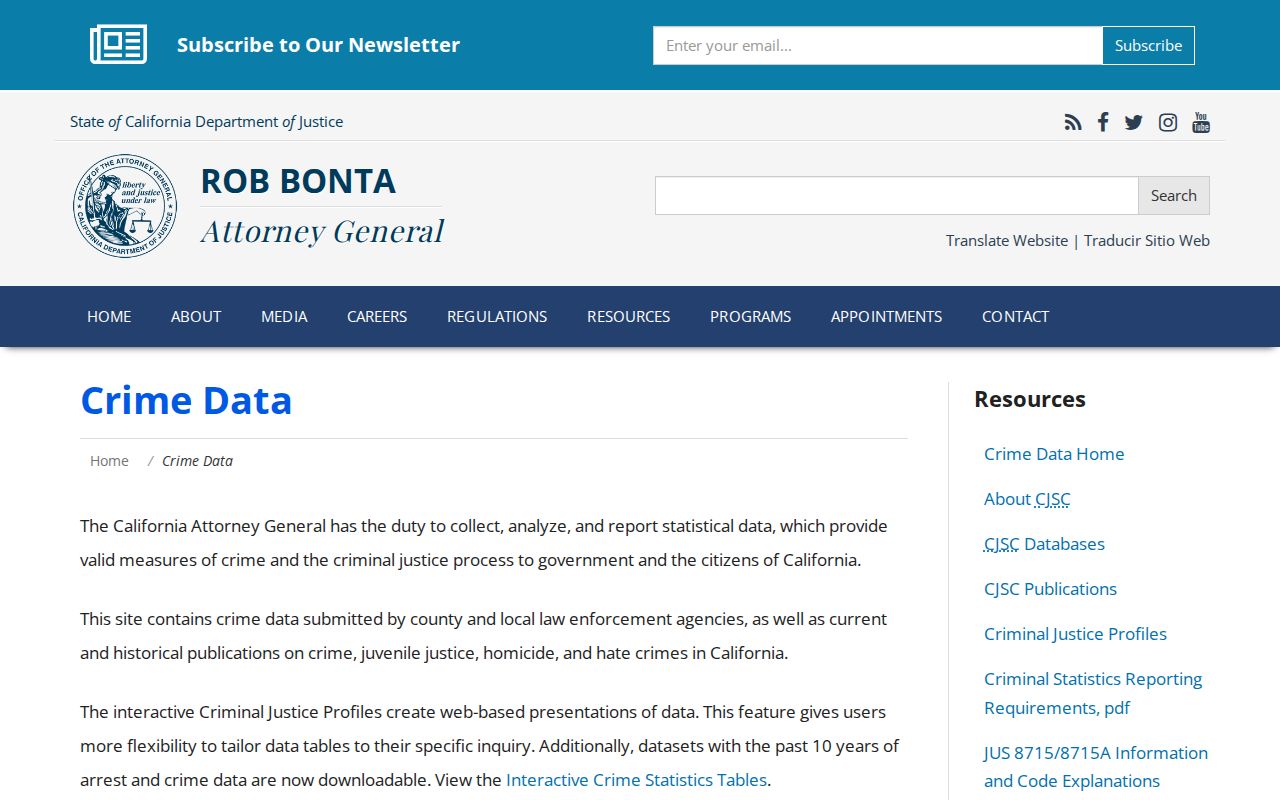
The dashboard is useful for patterns and totals, while county booking systems remain the source for a recent individual arrest.
Note: OpenJustice arrest statistics describe agency reports in aggregate and do not establish any named person's California arrest history.
How California Arrests Reach the Record
A reportable California arrest becomes fingerprint-linked during booking. Live Scan sends biometrics and arrest data to the CA DOJ Bureau of Criminal Information and Analysis. DOJ matches that event to the person's California Identification number rather than relying only on a name. The prosecutor then decides whether to file a complaint. If a case is filed, the Superior Court records hearings, orders, the disposition, and any sentence. Justice agencies later send reportable results back to CA DOJ.
Data flow: Arrest › Booking › Fingerprint Submission › CA DOJ Entry › Court Disposition
The chain can have gaps. A county source may be newer than the statewide entry, and a court case may never exist when prosecutors do not file charges. Penal Code section 13151 requires the Superior Court to report specified dispositions, the CII number, and court docket number within 30 days. CA DOJ still recognizes that court information can be missing or wrong. That is why the source court and the fingerprint record should be checked together.
California Arrest Totals Explained
CA DOJ reported 810,487 California arrests for 2024. That total included 777,613 adult and 32,874 juvenile arrests. It also included 261,400 felony and 548,538 misdemeanor arrests, plus 549 juvenile status-offense arrests. The statewide arrest rate was 2,673.8 per 100,000, up 2.4 percent from 2023. These figures count arrest events reported through the state program. They do not show guilt, and one arrest may contain more than one alleged offense.
The CA DOJ 2024 statewide crime and arrest release places those figures alongside crime, disposition, probation, and justice-personnel measures.
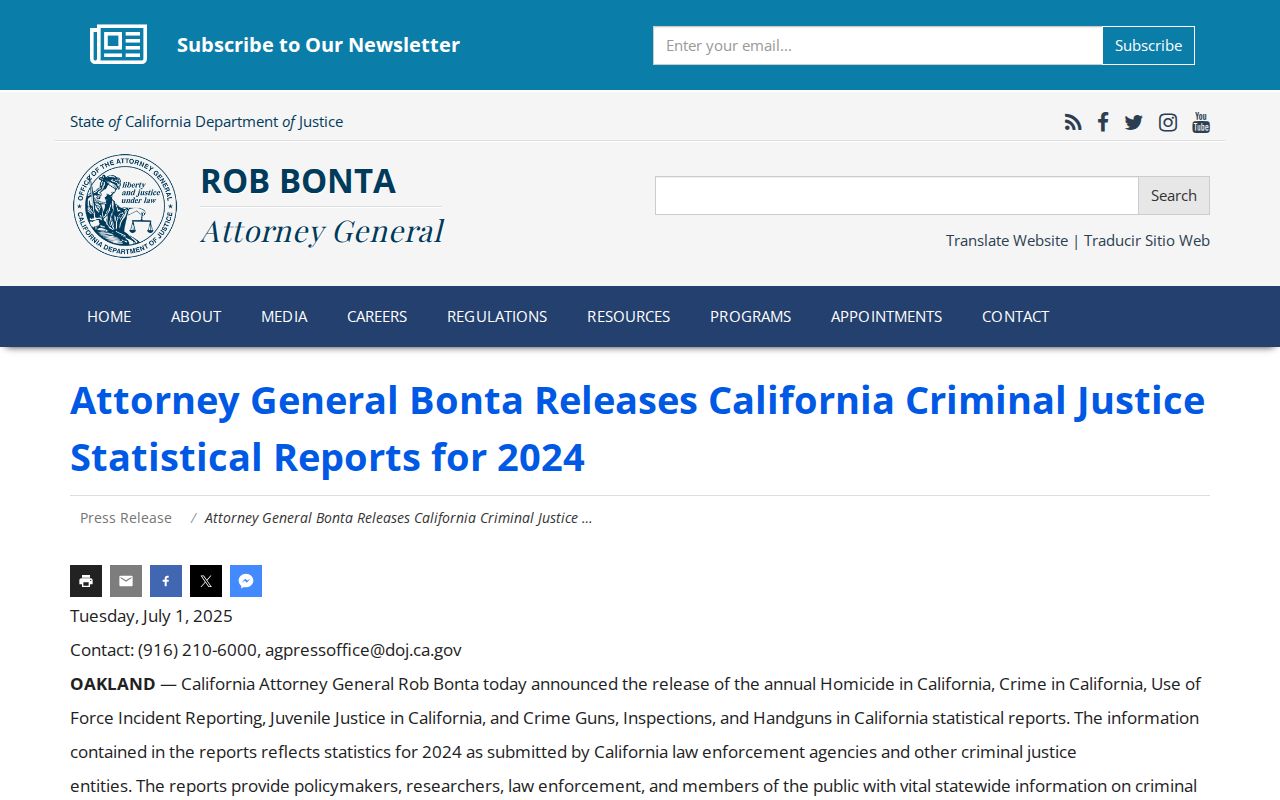
The report gives scale and trend context. It does not replace an official county booking record, case docket, or personal CA DOJ Record Review.
Looking Up Arrests in California
A California arrest lookup works best as a short sequence. Start with the place and the type of record, not a broad name search. Bookings, blotters, and current jail rosters live with county agencies. Filed criminal cases live with each county's Superior Court. CA DOJ has the fingerprint-linked statewide summary, but only the subject may request their own complete record through the public Record Review process.
- Identify the likely county and arresting agency. Use the directory of all 58 California counties to reach the official local route.
- Search the sheriff's current-inmate or booking service. If no roster is offered, contact the county jail information line.
- Use the Judicial Council's Find My Court directory, then check that Superior Court's criminal index or clerk after charges could have been filed.
- Request the releasable arrest report from the arresting agency. A focused California Public Records Act request may help, but protected and active-investigation details can be withheld.
- For your own statewide arrest history, submit fingerprints for CA DOJ Record Review and compare its result with the county source files.
California Arrest Filing Can Lag
A same-day jail entry may appear before any court record. Booking follows arrest, but a Superior Court case begins only after a prosecutor files a complaint or an indictment is returned. Release can also occur before that decision. The court index may therefore be blank even when an official county booking exists. The reverse can happen later. A jail roster may stop showing a person after release or transfer while the court case remains active.
Quick answer: A missing court result does not cancel a recent arrest record. Recheck the filing county's Superior Court and ask the clerk about indexing time.
Record type is the key. The arrest report describes the officer's basis and incident. The booking file describes intake and custody. The court file shows charges actually filed and their outcome. The CA DOJ RAP sheet compiles reportable fingerprint-linked events and dispositions received from agencies. Those four sources may update on different schedules.
Inside a California Arrest Record
Fields depend on the record holder and the public-access rules that apply. A California sheriff roster often shows less than the underlying booking packet. An arresting agency may redact victim, witness, juvenile, medical, and active-investigation information. Booking photos are not a statewide CA DOJ search product, and their release varies by local agency and law. Commercial mugshot republication is not a sound official source.
| Name and identifiers | Recorded name, aliases where used, age or date-of-birth information, physical descriptors, and fingerprint-linked CII number in the restricted DOJ file. |
|---|---|
| Event details | Incident or arrest number, date, time, location, arresting agency, and the legal basis such as a warrant or probable cause. |
| Booking details | County booking number and date, intake fingerprints, housing location, and a photograph where the agency lawfully releases one. |
| Alleged offenses | Charges and statutes recorded at booking, with offense level when supplied. These may differ from charges later filed in court. |
| Custody and release | Bail, release method, current housing, court date, or release status when those fields are published by the jail. |
| Later result | A disposition cross-reference only after agencies report it. The county court file remains the source for the actual judgment and orders. |
When California Jail Search Is Blank
A blank California county jail search has several possible causes. The name may be entered differently. The person may have been cited and released, released after booking, moved to another county, transferred to state or federal custody, or excluded from the public roster. A short intake delay can matter too. Juvenile arrest and delinquency information is generally confidential, so an adult booking search is not a valid way to rule out juvenile contact.
Check the arresting agency and likely jail first. Then ask the jail information line about recent release or transfer. Search the filing court after enough time has passed for a complaint. If a state-prison transfer occurred, use CIRIS. Federal custody belongs in the Bureau of Prisons locator. No result in one custody system proves only that its public search returned no match. It does not prove there was no California arrest.
Note: Name spelling, release, transfer, delayed intake, and confidentiality can each produce a blank county booking search.
California Jail or CIRIS?
County jail and state prison are separate custody layers. County jails hold many people awaiting arraignment or trial, serving local sentences, or waiting for transfer. CDCR receives people committed to state prison after Superior Court sentencing. California's 2011 public-safety realignment adds a crucial wrinkle: many Penal Code section 1170(h) felony sentences are served locally. A felony label alone does not mean the person will appear in CIRIS.
| System | Best use | What it does not prove |
|---|---|---|
| County jail roster | Recent booking, local custody, bail, charges, court date, or release status | Conviction, complete arrest history, or later prison custody |
| CIRIS | Current CDCR custody, CDCR number, institution, admission, commitment county, and selected parole-date context | County booking, full RAP sheet, offense details, or every past incarceration |
The official California Incarcerated Records and Information Search accepts a CDCR number or last name.
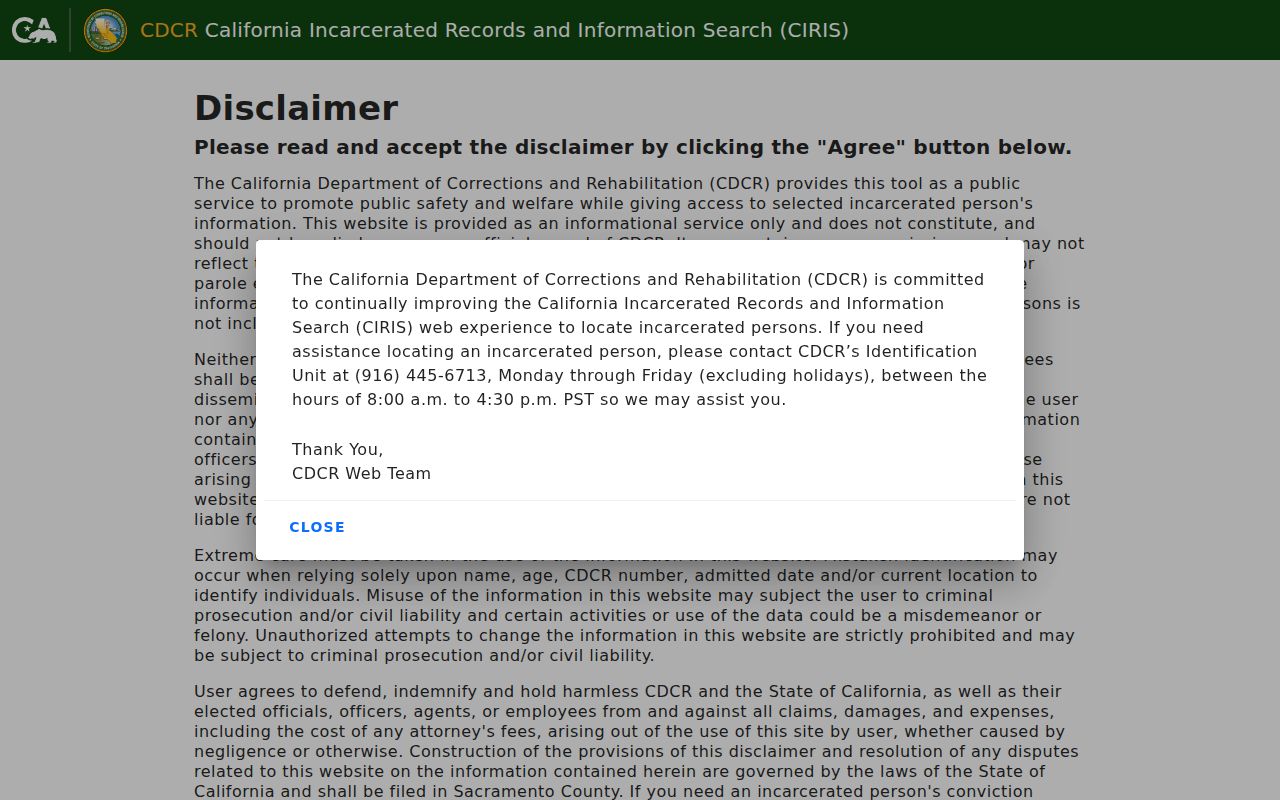
CIRIS updates daily and supplies custody context, but it is not a county jail locator or a California arrest-history search.
Arrests vs Convictions in California
An arrest is an accusation event. A conviction is a court judgment entered after a guilty plea, verdict, or other qualifying adjudication. California records can preserve the arrest even when no charge was filed, a case was dismissed, or the person was acquitted. Public access also differs by source. A jail roster can publish current custody data, while a CA DOJ summary criminal history remains confidential under Penal Code section 11105 except for authorized dissemination and a person's own fingerprint review.
| Question | Arrest record | Conviction record |
|---|---|---|
| Who creates it? | Arresting agency and receiving county jail | Superior Court, then reported to CA DOJ when required |
| What does it establish? | An arrest and allegations recorded at that time | A court finding or accepted plea and resulting judgment |
| Where is it checked? | Agency report, county booking source, or subject-only DOJ review | County court file and the subject's DOJ record after reporting |
| What relief may apply? | Petition or automatic arrest-record relief under sections 851.91 or 851.93 | Dismissal or automatic conviction relief where statutory terms are met |
Note: An arrest entry without a disposition is not proof of guilt; confirm the result with the California county court that handled it.
Correcting California Arrest Dispositions
Start with your own fingerprint-based CA DOJ Record Review. Compare each arrest cycle against the Superior Court docket and signed orders from the filing county. If the court result is missing or wrong, ask that court to send corrected information to the Bureau of Criminal Information and Analysis. A formal DOJ challenge uses BCIA 8706 with supporting records. The correction chain matters because DOJ cannot turn an unsupported claim into an official disposition.
Relief is a different process. California offers petition-based sealing for qualifying arrests that did not lead to conviction under section 851.91, while section 851.93 directs monthly automatic review for eligible arrest records. The California Courts arrest-without-conviction instructions describe the statewide eligibility route. Filing still occurs in the Superior Court that handled the matter, and local procedures may vary.
Automatic or petitioned relief changes disclosure and record treatment. It does not mean every local source document is physically destroyed. After enough time for court and DOJ transmission, a new fingerprint Record Review can show whether the statewide entry now reflects the correction or relief.